Most people think building an AI agent is about prompts.
Better prompts, more context, smarter outputs.
But the moment you move beyond simple chatbot demos, the truth becomes obvious. It’s not about conversation design anymore. It’s about plumbing.
APIs are messy.
Databases are fragmented.
Security protocols vary across tools.
And real-world systems do not wait for perfect inputs.
This is the hard part of Agentic AI that nobody glamorizes. But if you are serious about deploying agents that actually work, this is where the work lives.
What Real Agents Actually Do
An agent in a production environment is not just predicting text. It is navigating infrastructure. It is making decisions in real time while pulling data from multiple systems, using tools that are not always designed to be used by machines, and adjusting when something breaks or changes.
You are no longer just scripting a response. You are orchestrating tools, knowledge, context, and access control. The prompt is just one piece. The system is the real challenge.
At EasyBee AI, we call this the plumbing of the agentic world.
It is the hidden layer that separates the flashy prototypes from the production-grade systems. And for mid-sized businesses that want to scale AI across departments, this layer is everything.
Smarter Prompts Are Not Enough
The most advanced language models today can already complete tasks that take several minutes and multiple steps. That window is expanding, and the complexity these agents can handle is increasing exponentially.
But the next leap is not just about making agents smarter.
It is about making their environments more reliable. Smarter prompts are useful. But smarter pipelines, smarter integrations, and smarter execution layers are what truly matter at scale.
Without the plumbing, you are not building an agent. You are building a demo.
What We’re Building at EasyBee AI
Our Hex architecture was designed from day one with this challenge in mind. It is modular, secure, and extensible.
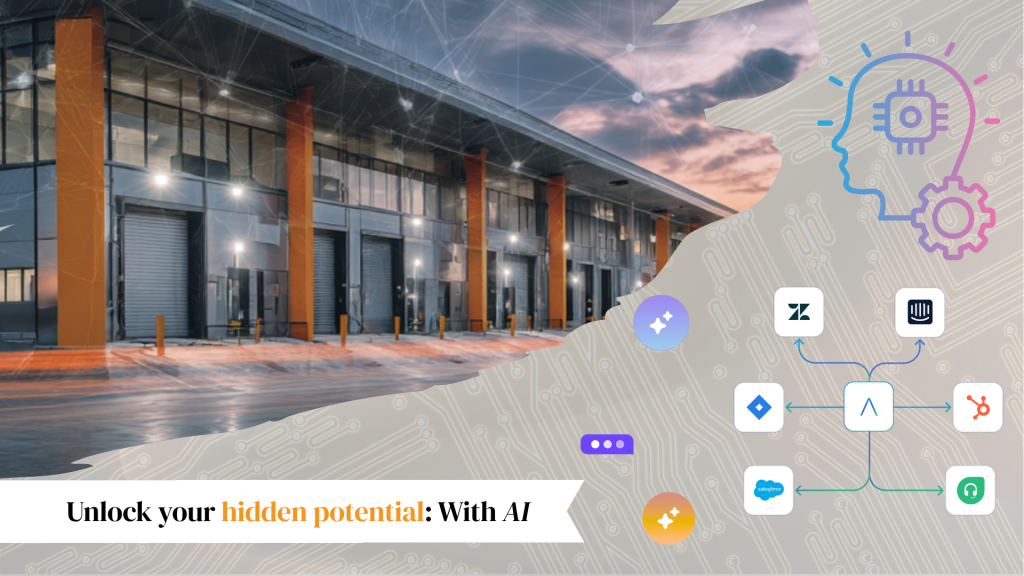
It connects agents with tools across CRMs, ticketing systems, analytics dashboards, and communication platforms. It handles context persistence, task management, and access protocols behind the scenes.
It allows our clients to plug in AI like infrastructure without needing to worry about every single prompt, API header, or system conflict.
This is what mid-market companies want. They do not have internal AI labs. They need solutions that are reliable, repeatable, and scalable. They need agents that work with their existing systems, not against them.
Invisible Work That Moves the Business
The teams that master this layer of Agentic AI will not just build better interfaces.
They will automate the invisible parts of work.
They will link systems that were never designed to talk to each other.
They will reduce manual tasks without rewriting entire workflows.
And the people using those systems may never notice.
But the business will. The outcomes will. The time saved, the revenue gained, and the errors avoided will make it clear.
So ask yourself — are you building for that future? Or waiting to be surprised by it?